
Business Visitor vs. Work Permit in Canada
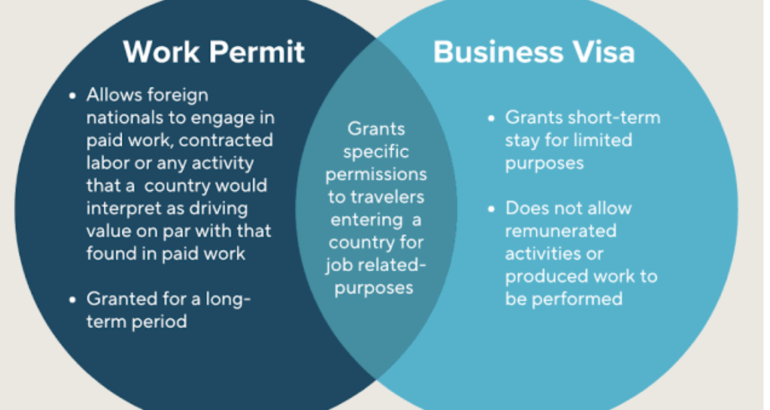
A Canadian Business Visitor Visa allows international business professionals, investors, and corporate executives to enter Canada temporarily for international business activities such as attending meetings, trade shows, or negotiating contracts provided their primary source of income and main place of business remain strictly outside Canada. Conversely, a Canadian Work Permit is legally required the moment an individual engages in competitive activities in the Canadian labor market, manages day-to-day operations of a business physically located in Canada, or receives payment directly from a Canadian entity.
Crossing the border into Canada on business sounds simple enough. You book a flight, secure a Temporary Resident Visa (TRV) or Electronic Travel Authorization (eTA), declare “business” to the Canada Border Services Agency (CBSA) officer, and head to your destination.
However, many foreign entrepreneurs, corporate executives, and specialized experts face unexpected delays, secondary inspections, or formal entry refusals at Canadian ports of entry due to a single mistake: confusing a Business Visitor status with a Work Permit requirement.
Immigration, Refugees and Citizenship Canada (IRCC) maintains a fine legal boundary separating what constitutes “visiting for business” versus “entering the Canadian labor market.” Crossing that boundary without the correct authorization can result in serious immigration consequences, including a finding of non-compliance, misrepresentation, or a multi-year ban from entering Canada.
To help you choose the right path, this guide explains the legal distinctions, operational boundaries, and practical scenarios determining whether you need a Business Visitor Visa or a Work Permit for your trip to Canada.
Defining the Core Differences: Business Visitor vs. Work Permit
To determine which status applies to your upcoming trip, you must evaluate three core variables: source of remuneration, nature of the work, and impact on the local Canadian labor market.
What Is a Canadian Business Visitor?
Under Section 186(a) of the Immigration and Refugee Protection Regulations (IRPR), a business visitor is defined as a foreign national who visits Canada to participate in international business activities without directly entering the Canadian labor market.
To legally qualify as a Business Visitor in Canada, your situation must meet three non-negotiable criteria:
- Source of Remuneration: You must be paid entirely outside Canada. No salary, stipend, or direct fee for service can come from a Canadian entity.
- Principal Place of Business: The primary place of business and accrual of profits must remain firmly outside Canada.
- No Direct Labor: You cannot perform work that competes with Canadian workers or provides direct hands-on labor inside a Canadian business entity.
What Is a Canadian Work Permit?
Under Canadian immigration law, “work” is defined broadly as any activity for which a foreign national receives wages or commission, or any activity that directly competes with Canadian citizens or permanent residents in the local labor market.
If your role requires you to manage operations on-site, perform hands-on technical or professional labor, provide direct services to Canadian clients, or receive payment from a Canadian company, IRCC legally classifies your activity as work. Consequently, you must obtain a formal Work Permit either through a Labor Market Impact Assessment (LMIA) or via an LMIA-exempt International Mobility Program (IMP) stream, such as the C11 Entrepreneur pathway or Intra-Company Transferee (ICT) program.
Detailed Feature Breakdown: Business Visitor vs. Work Permit
To understand how these two immigration categories operate in practice, here is a detailed breakdown of their key features:
- Legal Authority:
- Business Visitor: Governed under IRPR Regulation R186(a) (Work without a permit stream).
- Work Permit: Governed under IRPR Regulation R200 and associated International Mobility / TFWP provisions.
- Maximum Authorized Stay:
- Business Visitor: Typically granted for up to 6 months per entry at the discretion of the CBSA officer.
- Work Permit: Issued for a defined term, usually ranging from 1 to 3 years, and can be renewed within Canada.
- Source of Compensation:
- Business Visitor: Must remain strictly foreign. All wages, bonuses, and operational fees must originate outside Canada.
- Work Permit: Can be paid by a Canadian entity, a foreign entity, or a combination of both.
- Impact on the Local Labor Market:
- Business Visitor: Zero direct competition with local workers. You are facilitating international trade, not filling a job.
- Work Permit: Evaluated to ensure positive or neutral labor impact, or exempted via specific economic mobility streams.
- Documentation Received at Border:
- Business Visitor: No separate paper work permit is issued. Entry is granted via a passport stamp or standard visitor record.
- Work Permit: A formal, physical paper document specifying employer, location, and conditions is printed and stapled in your passport.
- Day-to-Day Business Management:
- Business Visitor: Restricted to strategic oversight, negotiations, and high-level meetings. Direct operational management is prohibited.
- Work Permit: Full operational management, supervision of staff, and day-to-day execution of business duties are fully permitted.
- Family Member Benefits:
- Business Visitor: Dependents must apply for standard visitor visas or eTAs separately; spouse cannot work in Canada.
- Work Permit: Spouses of eligible high-skilled work permit holders may qualify for an Open Work Permit, and minor children can attend public school.
- Pathway to Permanent Residence:
- Business Visitor: Provides no direct credit or pathway toward Canadian PR.
- Work Permit: Accumulates valuable Canadian work experience that boosts scores under Express Entry (Canadian Experience Class) or Provincial Nominee Programs (PNPs).
What Can You Legally Do as a Business Visitor in Canada?
Many business owners assume that if they own the foreign company, they can freely enter Canada to oversee local projects or manage a newly incorporated subsidiary. This is one of the most frequent errors reported by CBSA border officials.
Here is a clear breakdown of what IRCC permits and strictly forbids under Business Visitor status.
Permitted Business Visitor Activities
Under official IRCC Business Visitor Guidelines, you are generally permitted to do the following:
- Attending Meetings and Conferences: Meeting with potential clients, business partners, board members, or suppliers to discuss contracts or strategy.
- Buying Canadian Goods or Services: Conducting site visits, inspecting facilities, or making purchasing decisions on behalf of a foreign business.
- Taking Orders for Foreign Products: Securing orders or negotiating sales agreements for goods manufactured outside Canada.
- Attending Trade Fairs and Conventions: Representing your company at an industry expo or trade show (provided you are not directly selling products to the retail public on-site).
- Receiving Corporate Training: Participating in internal training provided by a Canadian parent or affiliate company (provided you are not actively working or performing services for that company during the visit).
- After-Sales Service (Specific Scope): Servicing, repairing, or installing specialized equipment purchased outside Canada, provided this service is explicitly stated in the original purchase, lease, or warranty agreement.
Prohibited Business Visitor Activities
You cannot perform any of the following tasks as a Business Visitor. Attempting to do so without a valid work permit constitutes unauthorized work:
- Managing Day-to-Day Business Operations: Supervising local employees, handling daily schedules, or actively making operational decisions inside a Canadian facility.
- Providing Direct Professional Services: Delivering consulting, legal, accounting, IT, or engineering services directly to Canadian clients on a billable basis.
- Filling a Vacant Job Opening: Stepping in to temporarily cover a role that a Canadian worker would otherwise perform.
- Receiving Direct Canadian Compensation: Being placed on a Canadian payroll or accepting contract payments from a Canadian bank account.
When Do You Need a Work Permit Instead?
If your business goals go beyond short visits or strategic discussions, you must secure a work permit before commencing operations. Below are the most common scenarios where foreign entrepreneurs and executives transition from visitors to work permit holders.
       [ Planned Activity in Canada ]
                     |
         Is source of income outside Canada
      AND no direct labor market entry?
        /                         \
     (YES)                        (NO)
      /                             \
[ Business Visitor ]        [ Work Permit Needed ]
(R186a Status)             /                      \
            [Entrepreneur/Owner]       [Corporate Employee]
                   |                             |
            (C11 Permit)                  (ICT / LMIA)
Scenario 1: Expanding or Launching a Business in Canada (C11 Work Permit)
If you are an entrepreneur or investor who wants to buy an existing Canadian business or launch a new subsidiary, you can enter as a Business Visitor to conduct market research, consult with lawyers, and select office locations.
However, once the business is established and you need to physically manage operations, hire staff, or oversee services inside Canada, you require an International Mobility Program C11 Entrepreneur Work Permit. This LMIA-exempt category allows foreign business owners holding controlling equity interest to work in Canada, provided their enterprise generates a significant economic, cultural, or social benefit for Canadians.
Scenario 2: Transferring Foreign Staff to a Canadian Branch (Intra-Company Transferee)
If your multinational enterprise already operates a parent company abroad and has a subsidiary, branch, or affiliate in Canada, key executive or specialized knowledge staff cannot simply enter on visitor status to work on long-term client projects.
They require an Intra-Company Transferee (ICT) Work Permit under Regulation R205(a). This program enables smooth transfers of executive, senior managerial, or specialized knowledge personnel without needing an LMIA.
Scenario 3: Contracting and On-Site Client Deliverables
If a Canadian client hires your foreign software company to install custom enterprise software and your engineers need to spend three months on-site writing code or integrating systems, they generally cannot do this on a Business Visitor status. Because they are delivering a core billable service on Canadian soil, they are entering the local labor market and typically require a temporary work permit.
Border Crossing Risks: What CBSA Officers Look For
When arriving at a Canadian airport or land border crossing, a Canada Border Services Agency (CBSA) officer’s duty is to verify your intent and ensure full compliance with Canadian immigration law.
If you claim to be entering as a Business Visitor, officers will routinely check for red flags that suggest you are actually entering to perform unauthorized work:
- Duration of Stay: Asking for an extended stay (e.g., 4 to 6 months) for simple “business meetings” raises immediate scrutiny.
- Tools of the Trade: Carrying specialized equipment, heavy tools, software development kits, or company uniforms in your luggage when claiming to be attending a conference.
- Vague Itineraries: Being unable to present a detailed meeting schedule, return flight confirmation, or an official invitation letter from a Canadian entity.
- Incorrect Documentation: Presenting a letter that states you are “coming to work on a project for our Canadian branch” instead of “attending strategic discussions.”
If a border officer determines that your intended activities cross the line into work, they can deny you entry, issue a Voluntary Departure order, or issue a formal Direction to Leave Canada, creating an adverse immigration record that impacts future travel globally.
How to Prepare for Entry: Essential Documentation Checklist
Whether applying online for a Temporary Resident Visa (TRV) or presenting your credentials directly at a Canadian port of entry, solid documentation is your best defense against border entry issues.
Required Documents for a Business Visitor:
- Valid Passport: Valid for at least six months beyond your planned date of departure.
- Official Letter of Invitation: A detailed letter from the hosting Canadian business outlining the purpose of the visit, locations, contact details, and confirmation that no Canadian entity is compensating you directly.
- Support Letter from Foreign Employer: A letter from your home company confirming your job title, length of employment, confirmation that your salary will continue to be paid outside Canada, and the specific reasons for your travel.
- Proof of Foreign Assets/Ties: Documents demonstrating that your primary residence, business headquarters, and financial ties remain outside Canada.
- Return Flight Itinerary: Proof of scheduled travel out of Canada at the end of your visit.
Required Steps for a Business Work Permit (e.g., C11 or ICT):
- Corporate Structuring: Proper registration of the Canadian enterprise and demonstration of qualifying corporate relationship (for ICTs) or foreign ownership structure (for C11).
- Comprehensive Business Plan: Detailed operational plan showing financial viability, hiring forecasts for Canadian citizens/permanent residents, and local economic impact.
- Offer of Employment Portal Submission: Submitting the formal job offer through IRCC’s Employer Portal and paying the $230 employer compliance fee prior to the work permit application.
- Work Permit Application: Submitting a complete application online or at an eligible port of entry (for visa-exempt foreign nationals).
Selecting the Right Immigration Strategy for Your Canadian Expansion
Choosing between a Business Visitor status and a Work Permit is not just a matter of paperwork—it is a strategic decision that affects your business timelines, financial investment, and long-term immigration options.
For short-term exploratory visits, contract negotiations, or attending trade exhibitions, the Business Visitor pathway remains the fastest and most cost-effective option.
However, if your goal is long-term expansion, direct operational control, or building a permanent life in Canada through business ownership, securing an LMIA-Exempt Work Permit (such as C11 or ICT) provides a legal foundation that protects your investment and opens up paths toward Canadian Permanent Residence (PR).
At Real World Immigration, we specialize in guiding international business owners, corporate executives, and global entrepreneurs through the nuances of Canadian business immigration law. From structuring compliant visitor entries to preparing comprehensive C11 and ICT work permit applications, our team ensures your transition into the Canadian market is legally sound, efficient, and aligned with your long-term goals.
Contact the business immigration professionals at Real World Immigration today to review your business expansion plans and select the right immigration pathway for your upcoming trip.

Swati Raj


Leave a Comment