Canada Spousal Sponsorship 2026: Inland vs Outland Guide
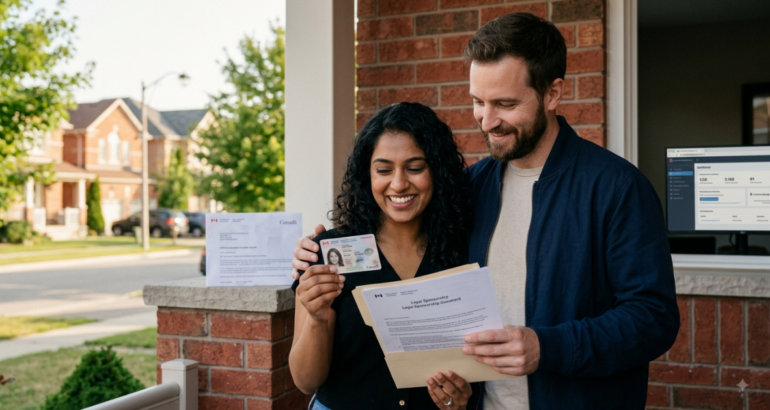
Sponsoring your spouse or common-law partner to live with you permanently in Canada is one of the most meaningful steps you will ever take. However, once you sit down to start the paperwork, you are immediately confronted with a major legal fork in the road: Should you apply via Inland or Outland sponsorship?
Choosing between the In-Canada Class (Inland) and the Family Class (Outland) is not just a matter of checking a box. It dictates how long you will wait for Permanent Residence (PR), whether your spouse can legally work in Canada during processing, whether they can travel abroad, and what legal protections you have if IRCC raises concerns about your file.
At Real World Immigration, our Brampton-based consulting team regularly helps couples evaluate these exact pathways. This comprehensive guide breaks down current processing trends, core differences, work permit strategies, and expert tips to help you pick the right route for your family.
1. What Is the Difference Between Inland and Outland Sponsorship?
While both streams ultimately lead to the same result Canadian Permanent Residency for your spouse they cater to different living situations and come with distinct legal frameworks.
Inland Sponsorship (In-Canada Class)
Inland sponsorship is designed for couples who are already living together in Canada. The sponsored partner must hold valid temporary status (such as a visitor visa, study permit, or work permit) or be eligible under specific public policies.
- Key Advantage: The sponsored spouse is eligible to apply for a Spousal Open Work Permit (SOWP) while their PR application processes.
- Key Limitation: The sponsored partner is expected to remain living in Canada throughout processing. Leaving the country during this period carries significant risk; if they are refused re-entry by border officials, the inland application can be deemed abandoned.
Outland Sponsorship (Family Class)
Outland sponsorship is historically tailored for couples where the sponsored partner resides outside of Canada. The application is processed through the primary visa office responsible for the applicant’s home country or country of legal residence.
- Strategic Insight: You can choose Outland sponsorship even if your spouse is currently living with you in Canada under temporary status.
- Key Advantage: Preserves full travel flexibility and faster overall processing queues globally.
- Key Limitation: Unless the sponsored spouse qualifies for a specific dual-intent work permit policy inside Canada, they must await PR approval to gain full Canadian employment rights.
2. Processing Times Compared
Immigration, Refugees and Citizenship Canada (IRCC) updates its processing estimates monthly to reflect inventory levels.
- Outland (Family Class): Averages roughly 12 to 17 months (depending on the visa office abroad).
- Inland (In-Canada Class): Averages roughly 18 to 25 months.
- Quebec-Destined Applications: Significantly longer processing times apply across both streams due to provincial undertaking caps.
(Note: Official figures represent the 80th percentile of completed files. Straightforward, well-documented applications often finalize ahead of posted government averages).
3. Side-by-Side Comparison Matrix
To make your decision easier, let’s look at how both options compare directly across core criteria:
| Feature | Inland Sponsorship (In-Canada Class) | Outland Sponsorship (Family Class) |
| Applicant Location | Must be physically in Canada with sponsor. | Lives abroad, OR lives in Canada under temporary status. |
| Work Permit Eligibility | Yes Spousal Open Work Permit (SOWP) available upon submission/AOR. | Limited – Requires specific public policy or temporary work permit. |
| Travel Restrictions | High risk; leaving Canada can jeopardize application status. | Flexible; free to travel in and out of Canada (subject to valid visa/eTA). |
| Appeal Rights (Refusal) | No right of appeal to the Immigration Appeal Division (IAD); Judicial Review only. | Full right of appeal to the Immigration Appeal Division (IAD). |
| Processing Speed | Slower (averages 18–25 months). | Faster (averages 12–17 months). |
4. Spousal Open Work Permits (SOWP) & Status Bridge
For many couples living in Canada, economic security is the deciding factor. This is where the Spousal Open Work Permit (SOWP) plays a crucial role.
                  ┌──────────────────────────────────────────────┐
                  │    Inland PR Application Submitted Online     │
                  └──────────────────────┬───────────────────────┘
                                         │
                                         ▼
                  ┌──────────────────────────────────────────────┐
                  │   Receive Acknowledgment of Receipt (AOR)    │
                  └──────────────────────┬───────────────────────┘
                                         │
                                         ▼
                  ┌──────────────────────────────────────────────┐
                  │  Submit SOWP Application (LMIA Exemption A74)│
                  └──────────────────────┬───────────────────────┘
                                         │
                                         ▼
                  ┌──────────────────────────────────────────────┐
                  │ SOWP Issued (Processes in roughly 3–4 mos)   │
                  │  • Full-time legal work for any employer     │
                  │  • Maintained status active during processing│
                  └──────────────────────────────────────────────┘
When you file an Inland sponsorship application, the sponsored partner can simultaneously (or after receiving their Acknowledgment of Receipt) apply for an open work permit under LMIA exemption code A74.
Because the SOWP generally processes in 3 to 4 months, your spouse can work full-time for virtually any Canadian employer while the longer PR processing queue runs in the background.
5. Strategic Option: Outland Sponsorship While Living inside Canada
A common misconception among applicants is that if both partners are physically together in Canada, they must apply Inland. This is false.
You can legally choose to submit an Outland (Family Class) application even while living together in Canada, provided the sponsored spouse holds valid temporary status (e.g., visitor status, student visa, or temporary work permit).
Why Choose Outland While Living in Canada?
- Faster Processing: Outland files process through global visa office networks, historically saving months compared to the Inland queue.
- Preserved Appeal Rights: If IRCC questions the genuineness of your relationship and refuses an Inland file, your only remedy is a costly Federal Court Judicial Review. With an Outland application, you hold a statutory right to appeal before the Immigration Appeal Division (IAD), where new evidence and oral testimony can be presented.
- Emergency Travel Freedom: If your partner must travel back home for a family emergency, an Outland file does not automatically collapse due to temporary absence from Canada.
6. Proving a Genuine Relationship: IRCC Requirements
Regardless of which stream you choose, the burden of proof rests entirely on the couple to demonstrate that their marriage or common-law relationship is genuine and was not entered into primarily for the purpose of acquiring status under the Immigration and Refugee Protection Act (IRPA).
IRCC officers review applications looking for cohesive, organic proof of life together. Key evidence categories include:
- Financial Co-mingling: Joint bank account statements, shared utility bills, joint residential leases, or property deeds showing both names.
- Proof of Cohabitation: Driver’s licenses showing matching addresses, official correspondence, and government mail sent to both partners at the same residence.
- Documentary Proof of Union: Government-issued marriage certificate or proof of 12 consecutive months of continuous cohabitation (for common-law partnerships).
- Social Recognition: Photos spanning the timeline of the relationship with family and friends (annotated with dates and locations), travel itineraries, communication logs (chat/call records during periods apart), and statutory declarations from friends and family affirming the union.
7. How Real World Immigration Ensures Application Success
A single missing document, incorrect declaration, or mismatched date can delay a spousal sponsorship application by six months or lead to an unexpected refusal letter.
At Real World Immigration, our certified team takes the stress off your shoulders:
- Tailored Strategy Evaluation: We evaluate your current status, travel requirements, and financial goals to determine whether Inland or Outland sponsorship yields the safest, fastest outcome.
- Meticulous Evidence Compilation: We structure your relationship narrative and financial proof into a clear, audit-ready package that addresses potential red flags upfront.
- SOWP & Status Maintenance: We handle temporary visa extensions and Spousal Open Work Permit filings to ensure your partner maintains unbroken legal status in Canada.
Start Your Family Reunification Journey Today
Whether your partner is sitting across the table in Brampton or across the world waiting for a visa, choosing the right sponsorship pathway is the critical first step toward building your future in Canada.
Don’t leave your family’s future to guesswork. Explore official guidelines on the IRCC Spousal Sponsorship Portal or contact our expert consultants at Real World Immigration today to book a personalized file assessment.

Swati Raj


Leave a Comment