
How to Prepare for Your IRB Refugee Hearing in Canada
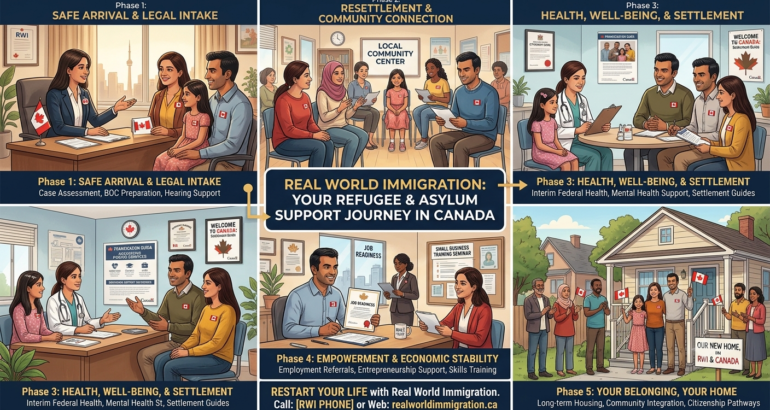
The period between filing your asylum claim and attending your official hearing before the Refugee Protection Division (RPD) of the Immigration and Refugee Board of Canada (IRB) is often defined by deep anxiety and uncertainty. For many asylum seekers, waiting months or even years for a hearing date feels like living in legal limbo.
However, this waiting period is actually your greatest advantage. Rather than treating it as lost time, you can use these months strategically to assemble a rock-solid evidentiary foundation, review your testimony, and mentally prepare for your hearing.
At Real World Immigration, we help claimants turn waiting-period stress into productive, step-by-step hearing preparation. This comprehensive guide outlines exactly what you should be doing while waiting for your IRB refugee hearing to maximize your chances of a positive decision.
Phase 1: Master Your Basis of Claim (BOC) Form
Your Basis of Claim (BOC) form is the most vital document in your entire asylum application. The IRB member assigned to your case will read every line of your BOC narrative before you ever step into the hearing room (or join via virtual hearing).
During your oral hearing, the decision-maker will compare your live answers against what is written in your BOC. Any contradictions, omissions, or inconsistent dates can harm your credibility.
┌─────────────────────────────────────────────────────────────────┐
│                    BOC MASTERY STEPS                            │
├─────────────────────────────────────────────────────────────────┤
│ 1. Re-read your entire BOC narrative once every month           │
│ 2. Flag all specific dates, locations, and names mentioned      │
│ 3. Identify potential gaps or unclear explanations             │
│ 4. Prepare clear additions or corrections through your representative │
└─────────────────────────────────────────────────────────────────┘
Key BOC Preparation Tasks:
- Obtain a Full Copy of Your Submitted BOC: Ensure you have an exact, legible copy of the final BOC package submitted to the IRB, including all attached personal statements.
- Memorize Your Timeline: Focus on critical milestones when the threats began, when specific incidents occurred, when you reported events to local authorities, and the exact dates you fled your home city and country.
- Address Inconsistencies Early: If you notice a typo, an incorrect date, or an omitted incident after submitting your BOC, notify your legal representative immediately. Amendments to your BOC can be filed before the IRB’s statutory disclosure deadline, protecting your credibility.
Phase 2: Systematically Gather Corroborating Evidence
Under Canadian refugee law, the burden of proof rests on the claimant. While your truthful testimony is essential, objective corroborating evidence validates your narrative and makes your claim significantly stronger.
                  ┌──────────────────────────────┐
                  │ TYPES OF REFUGEE EVIDENCE    │
                  └──────────────┬───────────────┘
                                 │
         ┌───────────────────────┼───────────────────────┐
         ▼                       ▼                       ▼
┌──────────────────┐   ┌──────────────────┐   ┌──────────────────┐
│ Personal Evidence│   │ Third-Party Proof│   │ Country Condition│
│ Passport, IDs,   │   │ Police reports,  │   │ Human rights     │
│ threat letters,  │   │ medical records, │   │ reports, media   │
│ SMS/WhatsApp logs│   │ affidavits       │   │ articles, expert │
└──────────────────┘   └──────────────────┘   └──────────────────┘
1. Personal & Identity Documents
You must establish your identity and nationality beyond doubt. Gather:
- Passports, national identity cards, birth certificates, and driver’s licenses.
- Membership cards for political parties, human rights groups, or targeted social organizations.
2. Incident-Specific Documentation
To substantiate the threats or violence you suffered, collect objective paper trails:
- Medical Records: Hospital intake notes, doctor reports, or psychological evaluations detailing physical injuries, trauma, or PTSD resulting from persecution.
- Police & Court Documents: Official complaint receipts, police reports, protection order requests, or court summonses showing you sought state protection.
- Digital Communication: Printed copies of threatening text messages, social media messages, emails, or call logs (with clear dates and sender details).
- Affidavits: Sworn statements from family members, colleagues, neighbors, or witnesses who personally observed the threats or persecution you faced.
3. Objective Country Condition Evidence
You must demonstrate that your personal fear aligns with current conditions in your country of origin. Gather:
- Human rights documentation from reputable organizations like Amnesty International or Human Rights Watch.
- The IRB’s own National Documentation Packages (NDPs) for your home country.
- Verified news articles detailing political instability, targeted violence against your group, or state corruption.
Important Rule: Any document not written in English or French must be accompanied by a certified translation and an official translator’s affidavit before it can be submitted to the IRB.
Phase 3: Understand the Legal Framework of Your Claim
To present a convincing case, you should understand the legal criteria the IRB member uses to evaluate your application under the Immigration and Refugee Protection Act (IRPA).
┌────────────────────────────────────────────────────────┐
│               CORE LEGAL REQUIREMENTS                  │
├──────────────────────────┬─────────────────────────────┤
│ 1. Well-Founded Fear     │ Subjective fear + Objective  │
│                          │ country conditions          │
│ 2. Persecution vs Harm   │ Convention ground vs risk   │
│                          │ of torture/cruel treatment  │
│ 3. State Protection      │ Proving state cannot/will   │
│                          │ not protect you             │
│ 4. Internal Flight       │ Showing nowhere else in your│
│    Alternative (IFA)     │ country is safe to move to  │
└──────────────────────────┴─────────────────────────────┘
The Key Legal Questions You Must Be Ready to Answer:
- Why did you leave your country when you did? (Explaining the specific triggering event).
- Why can’t you return today? (Demonstrating that the danger still exists).
- Did you seek help from the police or government? If not, why? (Establishing that state protection is inadequate or unavailable).
- Why couldn’t you move to a safer city in your home country? (Proving that an Internal Flight Alternative / IFA is not reasonable or safe).
At Real World Immigration, we review these four core pillars with you during pre-hearing prep so you can articulate your experiences clearly within the Canadian legal framework.
Phase 4: Conduct Practice Sessions & Mock Hearings
Anxiety often comes from fear of the unknown. Conducting structured mock hearing sessions is the most effective way to build confidence and reduce stress.
┌─────────────────────────────────────────────────────────────────┐
│                 MOCK HEARING PREPARATION ROADMAP                │
├─────────────────────────────────────────────────────────────────┤
│ Step 1: Simulate the physical or virtual hearing setup          │
│ Step 2: Practice answering direct, open-ended questions         │
│ Step 3: Train on handling cross-examination & probing questions │
│ Step 4: Practice working smoothly with an official interpreter  │
└─────────────────────────────────────────────────────────────────┘
How Mock Prep Helps You Succeed:
- Working with an Interpreter: If your hearing uses an interpreter, practice speaking in short, clear phrases. Pause frequently to allow complete translation. Never guess what a question meant always ask for clarification.
- Navigating Emotional Trauma: Discussing traumatic events before an official panel is difficult. Practice explaining these experiences factually without shutting down emotional control.
- Answering Direct Questions: Learn to give concise, truthful answers without rambling off-topic, which can cause confusion or raise unnecessary credibility concerns.
Phase 5: Maintain Legal Status and Personal Well-Being
Waiting for an IRB hearing is a marathon, not a sprint. Taking care of your daily life in Canada keeps you grounded while your file is processing.
┌────────────────────────────────────────────────────────┐
│            WAITING PERIOD ACTION CHECKLIST             │
├────────────────────────────────────────────────────────┤
│ [ ] Maintain valid Open Work Permit status             │
│ [ ] Keep Interim Federal Health Program (IFHP) active  │
│ [ ] Update address immediately if you move             │
│ [ ] Access legal and community support networks        │
└────────────────────────────────────────────────────────┘
Practical Steps to Take While Waiting:
- Work and Integration: Obtain your open work permit, secure employment, and build Canadian work experience. Staying busy reduces mental stress and provides financial independence.
- Healthcare Access: Use your Interim Federal Health Program (IFHP) coverage for routine health checkups and psychological counseling if you are experiencing severe stress or trauma.
- Keep Contact Information Updated: If you change your address, phone number, or email, notify the IRB and Immigration, Refugees and Citizenship Canada (IRCC) immediately. Missing a hearing notice sent to an old address can lead to your claim being declared abandoned.
What to Expect on Hearing Day
Understanding the format of the hearing helps eliminate surprise:
┌─────────────────────────────────────────────────────────────────┐
│                    IRB HEARING PROCEEDINGS                     │
├─────────────────────────────────────────────────────────────────┤
│ 1. Introductions and administration of oath/affirmation        │
│ 2. Claimant testimony and questioning by IRB member            │
│ 3. Questioning by your legal representative                     │
│ 4. Questioning by Minister's Counsel (if participating)        │
│ 5. Concluding oral arguments by your representative             │
│ 6. Oral decision rendered (or reserved for written decision)   │
└─────────────────────────────────────────────────────────────────┘
Most RPD hearings take between 3 and 4 hours. Whether conducted in person at an IRB regional office or virtually via Microsoft Teams, the core structure remains identical.
Summary Timeline: Preparing for Your IRB Hearing
Waiting Period Timeline
├── 1. Initial Filing: Secure BOC copy & organize initial records
├── 2. Ongoing Months: Gather medical, police & country condition evidence
├── 3. 2–3 Months Before: Review BOC narrative & complete translation of documents
├── 4. 20 Days Before (IRB Deadline): Submit full evidence package to IRB
└── 1–2 Weeks Before: Conduct comprehensive mock hearing prep
How Real World Immigration Prepares You for Success
Navigating an IRB hearing without experienced legal guidance carries significant risks. A well-prepared case package and thorough hearing preparation are often the deciding factors between a claim approval and a refusal.
At Real World Immigration, our specialized services for refugee claimants waiting for their IRB hearing include:
- Comprehensive File Audits: Identifying gaps or potential inconsistencies in your submitted Basis of Claim (BOC) form.
- Evidence Strategy & Curation: Assembling, organizing, and translating objective corroborating documents in strict compliance with IRB disclosure rules.
- Realistic Mock Hearings: Conducting detailed simulation sessions so you feel completely prepared for hearing day.
- Professional Legal Representation: Representing you during your oral hearing to ensure your statutory rights are fully protected.
Turn Your Waiting Period into Hearing Readiness
Your waiting period before the IRB does not have to be a time of passive stress. By gathering corroborating evidence, mastering your narrative timeline, and completing mock preparation, you actively build the foundation for a positive result.
Prepare for your hearing with confidence. Contact Real World Immigration today to schedule a comprehensive file review and hearing strategy session.

Swati Raj


Leave a Comment